1160 Kuala Street
Suite 200
Pearl City, HI 96782

Monday
7:00 am - 7:00 pm
Tuesday
7:00 am - 7:00 pm
Wednesday
7:00 am - 7:00 pm
Thursday
7:00 am - 7:00 pm
Friday
7:00 am - 7:00 pm
Saturday
8:00 am - 5:00 pm
Sunday
8:00 am - 5:00 pm

Dental Fillings

Modern strategies for repairing teeth affected by decay

When a tooth loses sound structure to decay or trauma, dental fillings restore form and function with minimal invasiveness. A filling replaces missing tooth tissue, seals the cavity against bacteria, and helps return the tooth to predictable chewing performance. The goal is to preserve as much healthy enamel and dentin as possible while rebuilding what has been lost.

Dental cavities remain a common oral health issue across all ages, so placing fillings continues to be one of the most frequently performed restorative procedures. While the basic purpose of a filling — to stop decay and restore structure — hasn’t changed, materials and techniques have evolved to deliver more comfortable visits and longer-lasting, more natural-looking results.

At Diamond Head Dental Care we focus on careful diagnosis and conservative repair, selecting materials and techniques that suit each patient’s needs and cosmetic goals. Clear explanations and patient comfort are central to every treatment we offer, and we work to ensure that every restored tooth functions well and blends seamlessly with the surrounding smile.

A short history: how filling materials developed into today’s options

People have attempted to treat damaged teeth for thousands of years, and archaeological evidence shows early forms of dental repair long before modern dentistry existed. Over time, advancements in metallurgy and materials science produced stronger and more workable restoratives, culminating in the widespread use of metal alloys in the 19th and 20th centuries.

The last several decades have seen a major shift toward materials that combine durability with improved esthetics and biocompatibility. Innovations in resin chemistry, ceramics, and bonding technology allow clinicians to restore teeth in ways that are conservative, mercury-free, and visually discreet — giving patients repairs that look and feel like natural teeth.

The image shows a close-up view of a human mouth with teeth, gums, and a tongue, displaying a dental implant and possibly other oral health procedures.

How to choose the best filling material for your tooth

Selecting a filling material depends on several factors: the size and location of the cavity, the amount of remaining tooth structure, esthetic priorities, and the expected functional load on the tooth. A back molar that endures heavy chewing requires a different material than a small front-tooth restoration where appearance is a primary concern.

Modern dentistry offers a spectrum of restorative materials, each with distinct advantages. Some are placed directly in a single visit, while others are custom-made outside the mouth and bonded into place. Your dentist will explain the trade-offs — such as wear resistance, color stability, and how much natural tooth must be removed — to help you arrive at an informed choice.

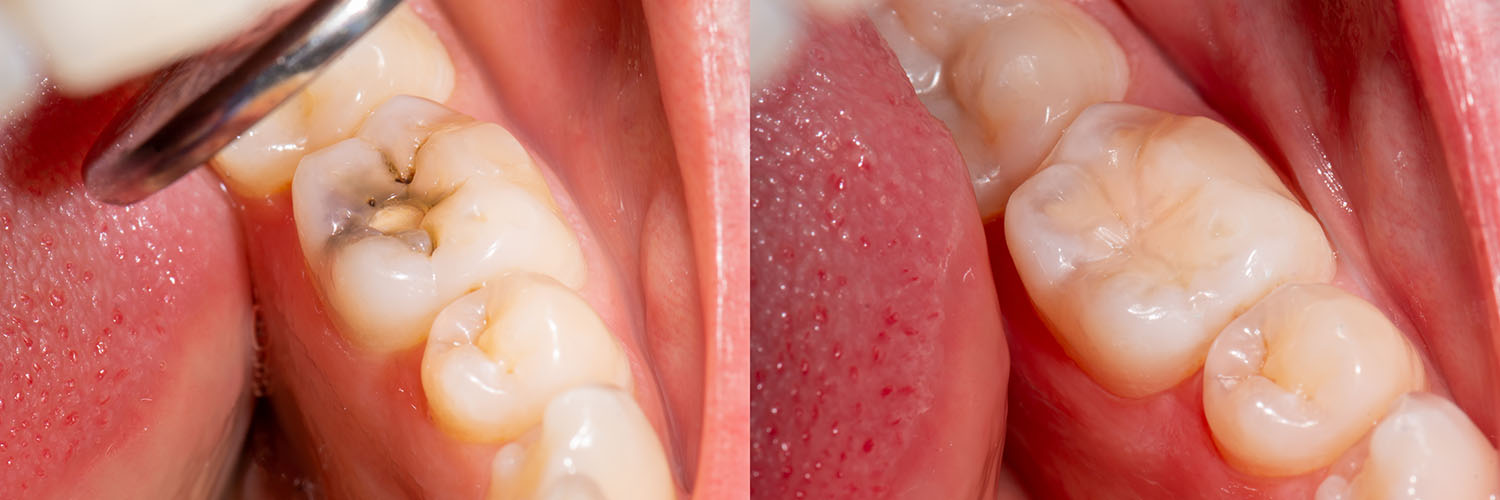
The image shows a close-up view of an oral cavity with multiple teeth, some of which appear to be decayed or damaged, with visible plaque and stains on the teeth, and the presence of a dental tool that may be used for cleaning or repairing the teeth.

What to expect during cavity treatment and filling placement

A typical filling appointment begins with a careful exam and assessment, often supplemented by digital X-rays to determine the extent of decay. Once a treatment plan is agreed upon, the tooth is isolated, and local anesthesia is administered when needed so that the procedure is comfortable for the patient.

Removal of decayed tissue is performed with gentle precision using rotary instruments, air abrasion, or laser technology depending on the clinical situation and the dentist’s assessment. The cavity is shaped to provide secure retention for the chosen material, and any necessary bonding steps are completed before material placement.

Direct materials such as composite are placed in carefully measured layers, shaped to match your bite, and cured with a light if required. Indirect restorations like ceramic inlays require an impression or digital scan and a second appointment for final seating once the restoration is fabricated. In all cases, final adjustments ensure a comfortable bite and smooth finish.

Protecting your new filling: immediate steps and long-term care

After a filling is placed, most patients return to normal activities quickly, but there are a few practical points to keep in mind. The numbness from local anesthesia may linger for an hour or two; avoid chewing or consuming hot beverages until full sensation returns to prevent accidental biting or burns.

Some sensitivity to temperature or pressure is common in the days following restoration as the tooth adjusts. This typically resolves on its own; persistent or worsening discomfort should be reported to your dentist so the restoration and bite can be evaluated and adjusted if necessary.

Long-term success depends on good oral hygiene and regular dental checkups. Brushing with fluoride toothpaste, cleaning between teeth daily, and maintaining routine professional care help detect early wear or recurrent decay around restorations so interventions can be timely and conservative.

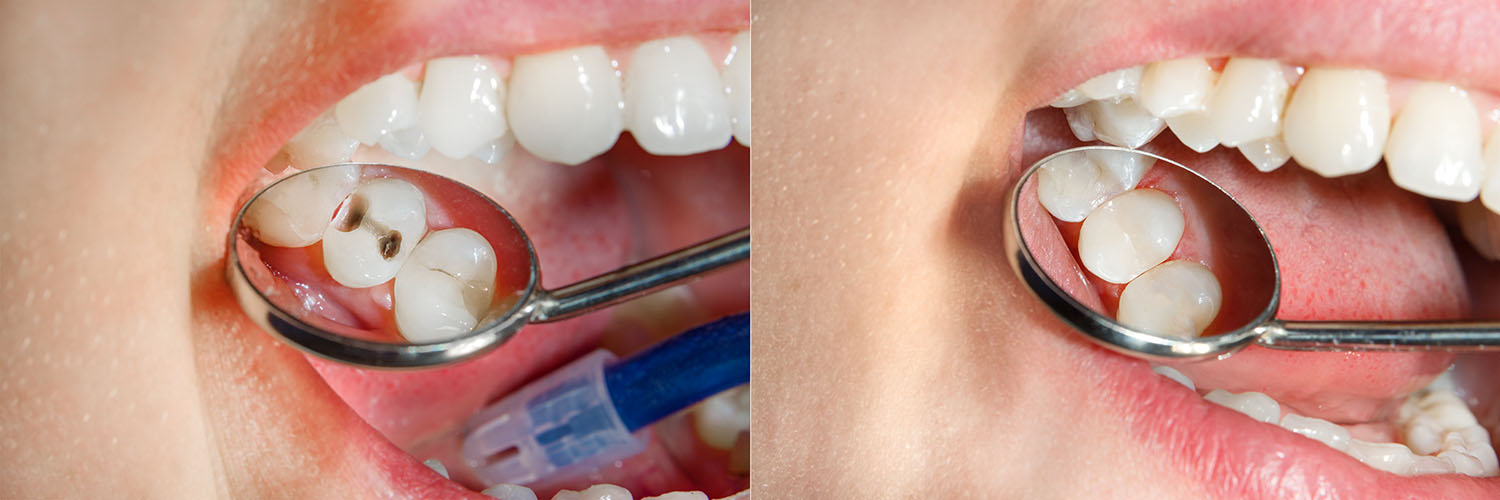
The image shows a person with an open mouth revealing teeth and a dental mirror, and there s a close-up of the same person s open mouth with a toothbrush inside.

When a filling isn’t the final solution: advanced restorative options

While many cavities can be treated predictably with standard fillings, there are situations where a larger restoration is more appropriate. Extensive decay, fractures, or previous large restorations may require inlays, onlays, crowns, or an indirect restoration to fully protect the tooth and restore function long-term.

In some cases, deep decay that approaches the tooth’s nerve may require additional treatment such as root canal therapy before a definitive restoration is placed. Your dentist will review the options and recommend the approach that best preserves natural tooth structure while restoring comfort and chewing ability.

Choosing the right path for a damaged tooth is a balance of function, longevity, and appearance. With modern materials and techniques, clinicians can often provide solutions that are durable, minimally invasive, and visually harmonious with the rest of your smile.

At Diamond Head Dental Care, we aim to combine thoughtful diagnosis with conservative, evidence-based treatment so patients can enjoy healthy, functional smiles. If you have questions about fillings, materials, or what to expect from treatment, please contact us to learn more.

Frequently Asked Questions

Are my teeth just sensitive, or do I have a cavity?

+

If the pleasure of eating a delicious bowl of ice cream or sipping a soothing cup of tea gets overshadowed by dental pain that makes you wince; it's time to contact our office. As skilled providers of care, we'll determine what's causing your discomfort and perform the treatment required to alleviate your symptoms and get you back on the road to oral health.

What causes a cavity to develop?

+

Cavities develop because of an infectious process that causes progressive damage to tooth structure. Despite starting as a pinpoint defect on the outermost enamel layer of your tooth, untreated dental decay progressively compromises more and more healthy tooth structure as it works its way to the inner layers of your tooth.

Can I still get a cavity if my tooth already has a filling?

+

Yes, you can still develop tooth decay on other surfaces of the tooth, around the margins of an old filling, or in fewer instances, recurrent decay underneath it. For this reason, it's essential to maintain excellent oral hygiene, a diet low in sugary beverages and sweets, and be sure to visit our office for routine checkups and care. While tooth decay is second only to the common cold in frequency, it's almost entirely preventable.

Is it possible to have more than one filling done at the same visit?

+

We value the time and comfort of our patients. If cavities are located on adjacent teeth, or in the same section of your smile, it may be possible to treat more than one tooth during your visit. However, how much is done each visit depends on several factors. We keep our patients well informed and tailor every treatment plan and visit to address their unique needs.

Does it hurt to get a filling?

+

Dental fillings are performed under local anesthesia to help ensure your comfort throughout the entire procedure. The involved tooth remains completely numb for the extent of your visit. Within one or two hours after the procedure is completed, the local anesthetic will gradually wear off, and normal sensations return.

When can I eat after my visit?

+

A tooth-colored composite filling is fully hardened and set by the end of your visit. However, we may advise you to wait a couple of hours until the local anesthesia has completely worn off. This advice is to help ensure you don't accidentally bite your lip, cheek, or tongue while still numb.

How long do dental fillings last?

+

The lifetime of a dental filling varies depending on the type of material used. While popular dental materials can last a decade or more with proper care, they can degrade over time, wear down, or even break. When this happens, you may experience some tooth sensitivity, a jagged edge, or a loose or dislodged piece of filling material. Whatever the case may be, it's essential to get the filling replaced before the tooth sustains further damage or other consequences arise. Beyond taking good care of your smile to help ensure the longevity of your fillings, our office regularly checks the status of your existing fillings as part of a routine checkup exam.

How much do fillings cost?

+

Dental fillings are an essential investment that serves to preserve and protect the health of your smile. With that said, how much a filling costs depends on the number of surfaces of the tooth involved and the filling material that is used. While tooth-colored composite fillings have a slightly higher cost, they offer the added benefits of being metal-free and much more aesthetically pleasing. Ceramic fillings, inlays, and onlays are more expensive than the preceding options but provide outstanding, long-lasting, and natural-looking results.

Does dental insurance cover the cost of getting a filling?

+

Dental insurances typically cover the cost of dental fillings. While we work with you to maximize your insurance benefits, there may still be an out-of-pocket expense. At the office of Diamond Head Dental Care, we strive to help you begin care without any additional financial stress or delay.

What is a dental filling, and why is it needed?

+

A dental filling is a restorative material placed into a tooth to replace tissue lost to decay or trauma and to seal the cavity against bacteria. Fillings restore a tooth's shape and chewing function so the tooth can continue to perform normally under the forces of biting and chewing. The primary goal of a filling is to remove diseased tissue while preserving as much healthy enamel and dentin as possible.

Fillings are one of the most common restorative procedures because cavities affect patients of all ages. Modern techniques aim to be minimally invasive so the tooth remains strong and esthetically consistent with surrounding teeth. When detected and treated early, a filling can prevent the need for more extensive restorative work.

What types of filling materials are available?

+

Several restorative materials are used today, each with particular strengths. Tooth-colored composite resins bond to the tooth and can be matched to surrounding enamel for a discreet repair, while traditional has a long history of durability in high-load areas of the mouth.

Precious metal alloys such as gold remain a reliable choice for patients seeking exceptional longevity and biocompatibility, though they are less commonly selected today. Some materials are placed directly in a single visit, while indirect restorations are fabricated outside the mouth and bonded later. Your dentist will explain the trade-offs in strength, appearance, and tooth preparation required for each option.

How is the best filling material chosen for my tooth?

+

Choosing a filling material depends on the size and location of the cavity, the amount of remaining tooth structure, esthetic priorities, and the functional load the tooth will bear. A small front-tooth restoration typically prioritizes appearance and color match, while a large posterior restoration requires a material that can withstand heavy chewing forces. The dentist will also consider any history of sensitivity, material compatibility, and patient preferences during the decision-making process.

Diagnosis often includes a clinical exam and digital X-rays to assess the extent of decay and the condition of the surrounding tooth. Based on those findings, your dentist will outline recommended options and explain how each would be placed and maintained so you can make an informed choice that balances longevity and appearance. Conservative approaches that preserve healthy tooth tissue are emphasized whenever clinically appropriate.

What should I expect during a filling appointment?

+

A filling appointment typically begins with a careful exam and, if needed, digital X-rays to determine the depth of the decay. The tooth is isolated and local anesthesia is used when appropriate to make the procedure comfortable; the dentist then removes decayed tissue using rotary instruments, air abrasion, or other conservative techniques. After the cavity is shaped to receive the chosen material, bonding steps are completed and the filling is placed, contoured, and polished to fit your bite.

For direct materials such as composite or glass ionomer, placement is usually completed in a single visit with incremental layering and light curing when required. Indirect restorations like ceramic inlays or onlays require an impression or digital scan and a second appointment for final seating once the restoration is fabricated. Final adjustments ensure a comfortable bite and smooth finish before you leave the office in Pearl City.

Will getting a filling be painful?

+

Most patients experience minimal discomfort during a filling because local anesthesia numbs the treatment area, and modern techniques prioritize patient comfort. You may feel pressure or vibration from dental instruments, but sharp pain is uncommon during a properly anesthetized procedure. If you have anxiety or special needs, tell the dental team so they can discuss available comfort measures prior to treatment.

After the anesthetic wears off you might notice mild sensitivity to temperature or pressure for several days as the tooth adjusts. This sensitivity typically resolves on its own, but if you experience persistent or increasing pain, contact your dentist so they can evaluate the restoration and bite. Prompt attention to prolonged symptoms helps prevent complications and keeps the tooth healthy.

How should I care for my filling after treatment?

+

Immediately after a filling, avoid chewing on the treated side until numbness has completely subsided to prevent accidental biting of lips or cheeks. Maintain excellent oral hygiene by brushing twice daily with fluoride toothpaste and cleaning between teeth once a day to reduce the risk of recurrent decay around the restoration. Routine dental checkups allow the dentist to monitor the filling for wear, marginal breakdown, or recurrent decay so problems can be addressed early.

Some fillings may show temporary sensitivity that diminishes over days to weeks; over-the-counter pain relievers and avoiding very hot or cold foods can help during this period. If sensitivity persists or if you notice rough edges, a high bite, or a change in how your teeth fit together, contact the practice for an evaluation so adjustments or repairs can be made. Our team at Diamond Head Dental Care emphasizes preventive care and clear instructions to support long-term success of restorations.

How long do dental fillings typically last?

+

The lifespan of a dental filling varies widely depending on the material used, the size and location of the restoration, a patient’s oral hygiene, and chewing habits. Some direct restorations such as composite resins have excellent longevity in low-to-moderate stress areas, while other materials may be recommended for their superior wear resistance in high-load posterior teeth. Proper maintenance, including regular dental visits, helps detect early signs of wear or marginal breakdown so the restoration can be conserved or replaced before more extensive treatment is needed.

Factors that can shorten a filling’s lifespan include bruxism (teeth grinding), high-sugar diets, and inadequate oral hygiene. During routine exams your dentist will check for discoloration, marginal staining, cracks, or leakage that suggest a filling is approaching the end of its serviceable life. When repairs or replacements are necessary, conservative options such as inlays or onlays may be considered to preserve remaining tooth structure.

Can fillings be used for children or baby teeth?

+

Yes, fillings are commonly used to treat cavities in primary (baby) teeth as well as permanent teeth, and the choice of material often reflects the clinical situation. Composites can also be used in visible areas to maintain appearance and function.

Treating cavities in primary teeth helps maintain space for permanent teeth, preserves chewing function, and reduces the risk of pain or infection. Behavior management and child-friendly techniques are important during pediatric treatment, and your dentist will explain the rationale for the chosen material and any follow-up needed based on the tooth’s expected time in the mouth.

What are common signs that a filling needs attention or replacement?

+

Signs that a filling may need repair or replacement include new or worsening sensitivity to hot, cold, or biting; visible cracks or roughness in the restoration; discoloration at the margin; and the sensation that the filling feels loose or high. Recurrent decay can develop at the junction between the filling and the natural tooth, and this often presents as dark staining or a new cavity next to an existing restoration. Any persistent or changing symptoms should prompt an evaluation so the underlying cause can be determined.

During an exam the dentist will assess the restoration visually and with radiographs when appropriate to evaluate its integrity and the health of the surrounding tooth. Early intervention to repair a failing filling is typically more conservative than delaying care until more extensive treatment is required. Your dental team can recommend repair, replacement, or alternative restorative approaches depending on the condition of the tooth.

When is a filling not enough and a more advanced restoration is needed?

+

A filling may not be the ideal solution when decay is extensive, a tooth has a large fracture, or previous restorations have removed substantial tooth structure. In such cases, indirect restorations like inlays, onlays, or crowns provide greater coverage and structural reinforcement. If decay reaches the tooth's nerve or there is significant infection, root canal therapy followed by a crown may be necessary to preserve the tooth long term.

The decision to proceed to a more advanced restoration balances function, longevity, and conservation of natural tooth tissue. Your dentist will explain the clinical findings, outline restorative options, and recommend the approach that best protects the tooth while meeting your functional and esthetic needs. Thoughtful, evidence-based planning helps ensure predictable outcomes and preserves oral health over time.

We Insurance! All PPO Dental Insurance Plans ACCEPTED!