1160 Kuala Street
Suite 200
Pearl City, HI 96782

Monday
7:00 am - 7:00 pm
Tuesday
7:00 am - 7:00 pm
Wednesday
7:00 am - 7:00 pm
Thursday
7:00 am - 7:00 pm
Friday
7:00 am - 7:00 pm
Saturday
8:00 am - 5:00 pm
Sunday
8:00 am - 5:00 pm

Dentures

Modern materials and improved techniques have made tooth replacement more reliable and lifelike than ever. While dental implants and fixed bridgework are excellent options for many patients, removable dentures continue to be an important, versatile solution for restoring missing teeth. They can rebuild a smile, support facial contours, and help people speak and eat with confidence.

At Diamond Head Dental Care, we design and fabricate dentures using high-quality materials with an emphasis on fit, function, and natural appearance. Every appliance is crafted to work with a patient’s individual anatomy so it feels comfortable and integrates well with the rest of the mouth.

We focus on individualized care that respects each patient’s goals and daily life. Whether someone needs a partial denture to fill a few gaps or a complete set to replace all teeth in an arch, the goal is the same: a durable, attractive solution that restores oral function and self-assurance.

Why missing teeth affect more than your smile

Losing teeth changes how the mouth works and how the face looks. Teeth play an essential role in biting, chewing, and clear speech. When teeth are missing, the ability to eat certain foods can be limited and speech sounds may shift, which affects everyday comfort and nutrition.

Beyond function, missing teeth alter the mechanical forces in the mouth. Adjacent teeth can drift into empty spaces, bite relationships can shift, and opposing teeth may over-erupt. These changes increase the risk of further dental problems and can make future restorative work more complex.

Facial support is another important consideration. Teeth and their roots help maintain bone volume in the jaws. When teeth are absent, the bone can gradually resorb, which subtly changes facial contours and can lead to a sunken or collapsed appearance over time. Replacing lost teeth helps preserve facial structure and overall oral health.

What removable dentures are and how they work

Woman sitting in dental chair receiving teeth cleaning, with dental hygienist holding blue toothbrush up to her mouth.

Removable dentures are prosthetic appliances that rest on the gums and replace missing teeth and surrounding tissues. They consist of artificial teeth set in a base that mimics natural gum tissue. Dentures can be made to replace a few teeth (partial dentures) or an entire arch (complete dentures).

These appliances are designed to be taken out for cleaning and to allow the oral tissues to rest overnight. That removability makes routine hygiene straightforward and allows clinicians to monitor the condition of remaining teeth and soft tissues more easily than with permanently fixed work.

Removable dentures are adaptable. Modern fabrication methods and materials give dentures a natural appearance and improved function compared with earlier generations. When planned carefully, they help restore chewing efficiency, improve speech clarity, and provide the support needed to maintain a balanced facial profile.

Choosing between full, partial, and implant-assisted options

A thoughtful evaluation is the first step to a successful denture outcome. Your dental team will assess the health of any remaining teeth, the quality of the gums and jawbone, your bite relationship, and your aesthetic goals. Those findings guide whether a partial denture, a full denture, or an implant-assisted solution is most appropriate.

Partial dentures are indicated when stable natural teeth remain and can provide retention and support. They commonly use clasps or precision attachments to connect to existing teeth, which helps keep the appliance secure while preventing unwanted movement in the dental arch.

Complete or full dentures replace all teeth in an upper or lower arch. They can be made after extractions and healing, or as immediate replacements placed at the time teeth are removed. When additional support is needed, overdentures or implant-supported designs can significantly improve stability and chewing performance.

Full denture approaches

Full dentures are tailored to each patient’s anatomy. In some cases, we wait for tissues to heal fully before creating the definitive appliance; in others, an immediate prosthesis provides continuous tooth replacement from the day of extraction. Treatment planning considers ridge shape, muscle tone, and how the denture will interact with surrounding structures.

Conventional full denture process

A conventional full denture is fabricated after the gums have healed following extractions. This timing often results in a more precise fit and fewer early adjustments because the tissues are stable. Multiple visits allow for careful impressions, try-ins, and final adjustments that prioritize comfort and function.

  • Immediate denture

    An immediate denture is inserted at the time teeth are removed so the patient does not go without teeth during healing. Because tissues change during the healing phase, these dentures frequently need temporary relines or adjustments and may be replaced by a definitive denture later on.

  • Overdenture

    An overdenture gains extra retention from attachments anchored to remaining tooth roots or specially placed implants. This approach preserves bone and offers improved stability compared with conventional dentures, while still allowing the prosthesis to be removed for cleaning.

  • Implant-supported denture

    Implant-supported dentures fasten to strategically placed implants in the jaw, providing secure attachment points that dramatically reduce movement. This option can restore biting efficiency and comfort for many patients who seek greater function than a traditional denture can provide.

Partial denture solutions

Partial dentures fill gaps left by one or more missing teeth while preserving the remaining natural dentition. They prevent neighboring teeth from shifting and help maintain proper bite alignment. Design choices—such as clasp type and material—are selected to balance strength, comfort, and aesthetics.

Materials and fabrication techniques have improved significantly. Frameworks can be made from cast metal for durability, flexible resin for comfort, or hybrid materials that offer a balance of strength and esthetics. Tooth shapes and shades are matched to the patient’s natural teeth, delivering a cohesive appearance.

A well-designed partial denture distributes chewing forces evenly and supports overall oral health. With proper maintenance and routine exams, partial dentures can be a long-lasting, practical component of a comprehensive dental plan.

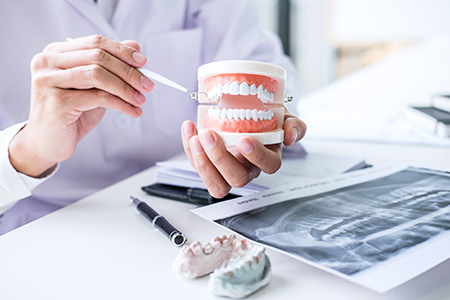
A dentist holding a tooth model, with a person s hand adjusting the model s teeth, set against a backdrop of dental equipment and supplies.

How a predictable denture is planned and made

Successful dentures result from careful coordination of clinical assessment, diagnostic imaging, and laboratory craftsmanship. The process typically includes medical and dental history review, oral exams, radiographs when needed, and a discussion of how the denture should look and function in daily life.

Impressions capture the precise shape of the gums and any remaining teeth. From these records, a dental laboratory creates models and wax try-ins that let the clinician evaluate tooth position, bite relationships, and esthetics before the final denture is processed. This stepwise approach reduces surprises and helps ensure a comfortable final result.

Occasionally, minor pre-prosthetic procedures are recommended to improve the fit of a denture. These might include simple tissue contouring or, in certain cases, tooth extractions or implant placement. Every recommendation is made with an eye toward long-term health and predictable function.

Once the denture is seated, follow-up visits allow for fine-tuning. Proper initial adjustments and a short-term care plan enable patients to adapt more quickly and enjoy the full benefits of their new prosthesis.

A man and woman sitting outdoors with a dog between them, smiling and posing for the photo.

What to expect during the adjustment period and ongoing care

Adapting to a new denture is a gradual process. Many patients notice changes in speech and increased saliva at first; these reactions are normal and typically subside as the mouth becomes accustomed to the appliance. Practicing speaking and eating soft foods at the beginning helps speed adaptation.

  • Adjusting to the fit

    Minor sore spots or pressure areas are possible during the initial wear period. Our team will make adjustments as needed. Wearing the denture and reporting trouble areas before the appointment helps pinpoint where relief is required.

  • Temporary changes in saliva and speech

    An increase in saliva is a common short-term response to any new oral appliance. Speech may feel different at first; reading aloud and regular conversation accelerate the learning curve.

  • Eating with your denture

    Start with softer foods and cut bites into smaller pieces. Chew on both sides of the mouth to distribute pressure evenly. Over time you’ll find that your chewing efficiency improves with practice and periodic adjustments.

  • Cleaning and daily care

    • Rinse dentures after meals and use a denture brush daily to remove food and plaque. Soak them in water when not in use and follow any specific cleaning recommendations provided by your clinician.

    • Maintain the health of any remaining natural teeth and the gums by brushing and flossing as advised. Keeping the oral tissues healthy supports the fit and longevity of the prosthesis.

    • Remove dentures at night to allow the tissues to rest. This practice helps reduce irritation and supports oral health over time.

  • Stability options and follow-up

    In some cases, adhesives or implant attachments are recommended to improve retention. Routine checkups let the clinician monitor fit, make relines when tissue contours change, and ensure the overall health of the oral cavity.

  • When relines are needed

    As the jaw’s bone and gum tissues remodel with time, the denture may require a reline to restore a snug, comfortable fit. Periodic maintenance extends the useful life of the appliance and keeps function consistent.

At Diamond Head Dental Care, our approach to dentures emphasizes careful planning, precise fabrication, and attentive follow-up so patients can rely on their prostheses for daily function and confidence. If you’d like to learn more about denture options and what to expect, please contact us for additional information.

Frequently Asked Questions

What's the best way to replace missing teeth?

+

Today, it’s easier than ever to replace missing teeth and achieve natural-looking, durable, and long-lasting results! Depending on a patient’s dental needs, lifestyle, expectations of care, and budget, choices can include conventional fixed bridgework, dental implants, or removable partial and complete dentures. At the office of Diamond Head Dental Care, we’ll discuss all your options in care and answer all your questions as you choose the solution that’s right for you.

Do dentures provide natural-looking results?

+

With advances in dental materials and technology, today’s dentures are more comfortable and realistic-looking than ever before.

Do I still have to see a dentist if I wear dentures?

+

Whether you wear partial or complete dentures, it’s essential to see the dentist for routine care. Besides checking the fit and condition of your dentures and making any necessary adjustments, you’ll also receive a comprehensive exam to check on the health of any remaining teeth as well as the soft and hard tissues in and around the oral cavity.

What's a same-day denture?

+

A same-day denture offers an accelerated design and fabrication process that allows a patient to go from impression taking to denture insertion in a single day.

What is the main benefit of an immediate denture?

+

For patients who don’t want to wait after having teeth extracted, an immediate denture can be inserted the same day your teeth are removed. Sometime later you may need the denture relined to address any changes in its fit once the extraction sites have completely healed.

What if I break my denture?

+

While no one wants to drop or break a partial or complete denture, accidents do happen. The good news is that in some cases, your partial or complete denture is reparable. It all depends on the extent of the damage. Don’t hesitate to contact our office if you’ve broken or damaged your denture. We’re happy to help.

What if the clasps on my partial have loosened?

+

The simple act of taking your partial denture in and out can cause certain types of metal clasps to loosen over time. When you come in for your checkup visit or contact our office for an adjustment, we’ll assess the fit of your partial and tighten the clasps for improved stability and comfort.

How much do partial or complete dentures cost?

+

While rebuilding a complete smile is a worthwhile investment, our office is sensitive to the costs involved in dental care. We customize care and will discuss which treatment options address your needs, lifestyle, and budget. How much a new denture will cost depends on the type of the prosthesis, its design, and the materials used to fabricate the supportive base, teeth, and clasps or precision attachments. Dentures that include the placement of dental implants for added retention and stability typically involve additional costs.

Does dental insurance cover the cost of dentures?

+

If you have dental insurance, your coverage may include a new or replacement set of dentures.  Our staff is happy to review your coverage with you to ensure you are maximizing your insurance benefits while minimizing any out of pocket expenses.

Why choose the office of Diamond Head Dental Care?

+

At the office of Diamond Head Dental Care, we provide an extensive range of dental services, including the latest and most effective methods to help patients with missing teeth rebuild complete and beautiful smiles. As skilled and experienced professionals, we recognize that every patient is different, and every smile is unique. We’re passionate about what we do and take great pride in providing personalized treatment plans while treating our patients as valued partners in care.

What are dentures and how do they work?

+

Dentures are removable prosthetic appliances that replace missing teeth and the adjacent gum tissue, restoring appearance and function. They consist of artificial teeth set in a base that mimics natural gum color and contours, and they rest on the oral tissues or attach to remaining teeth or implants for added support. By recreating tooth surfaces and proper bite relationships, dentures help patients chew, speak, and smile with greater confidence.

Modern dentures are designed to fit the unique anatomy of each mouth, with attention to ridge shape, muscle attachments, and how the appliance interacts with adjacent structures. Proper planning and multiple try-in steps help ensure a comfortable fit and natural appearance. Regular follow-up allows the clinician to adjust the appliance as tissues heal or remodel over time.

What is the difference between full, partial, and implant-supported dentures?

+

Full dentures, also called complete dentures, replace all teeth in the upper or lower arch and rely on tissue contours and suction for retention, while partial dentures fill gaps left by one or more missing teeth and connect to remaining natural teeth for support. Partial designs use clasps, precision attachments, or custom frameworks to keep the appliance stable and to prevent adjacent teeth from drifting. Each approach is chosen based on the number of remaining teeth, oral health, and the functional needs of the patient.

Implant-supported dentures use dental implants as secure anchor points to significantly improve stability and chewing efficiency compared with traditional removable prostheses. Implants can support overdentures that snap on and off or fixed hybrid prostheses that attach more rigidly, depending on treatment goals. The clinician will recommend the most appropriate option after assessing bone quality, tissue health, and long-term maintenance needs.

How are dentures planned and fabricated?

+

Planning begins with a thorough clinical evaluation, medical and dental history, and diagnostic records such as impressions and radiographs when indicated. The laboratory process typically involves creating models from impressions, arranging teeth in wax for try-ins, and fine-tuning esthetics, bite relationships, and phonetics before processing the final appliance. This stepwise approach reduces surprises and helps produce a predictable outcome that balances comfort and function.

Occasionally minor pre-prosthetic procedures are recommended to optimize fit, such as soft tissue contouring, extractions, or the strategic placement of implants for improved retention. Once the final denture is fabricated, the clinician will perform initial adjustments and schedule follow-up visits to refine fit and address sore spots. Ongoing maintenance, including relines and periodic evaluations, helps the denture remain comfortable and functional over time.

What should I expect during the adjustment period after getting dentures?

+

Adapting to new dentures is a gradual process that commonly includes increased saliva production, mild speech changes, and awareness of the appliance in the mouth at first. Sore spots and pressure areas can develop as tissues become accustomed to the prosthesis, and these are usually resolved with timely adjustments by the dental team. Practicing speech by reading aloud and starting with soft, small bites helps patients regain clarity in speech and improve chewing efficiency.

Follow-up visits during the first few weeks are important to address tenderness, make occlusal adjustments, and assess how the denture interacts with muscles and adjacent tissues. As swelling subsides and patients wear the denture consistently, many of the initial issues diminish and comfort improves. If persistent problems occur, the clinician may recommend relining, rebasing, or alternative retention strategies to achieve the desired outcome.

How should I clean and care for my dentures every day?

+

Daily care begins with removing and rinsing dentures after meals to dislodge food particles and reduce plaque buildup on the appliance. Use a soft denture brush or a nonabrasive brush and mild cleaner specifically designed for dentures to gently remove deposits, taking care not to damage acrylic or attachment components. When not worn, dentures should be kept moist by soaking them in water or an appropriate soaking solution to prevent warping and preserve fit.

Maintain the health of any remaining natural teeth and oral tissues by brushing gums, tongue, and natural teeth as directed, and attend routine dental exams so the clinician can monitor tissue health and the integrity of the prosthesis. Remove dentures at night to allow tissues to rest and reduce the risk of irritation. If attachments or implants are present, follow any additional hygiene instructions provided by the dental team to protect surrounding structures.

How often do dentures need maintenance or relining?

+

Denture maintenance is an ongoing process because the jawbone and soft tissues change naturally over time, which can affect fit and retention. Routine checkups allow the clinician to evaluate fit, inspect for wear or damage, and recommend relines or rebasing when tissue contours change enough to compromise comfort or function. Addressing small issues early can prevent larger problems and extend the useful life of the appliance.

Relines restore close adaptation between the denture base and the supporting tissues, improving comfort and reducing movement during function. The frequency of relining varies with each patient’s rate of bone remodeling and tissue changes, so periodic evaluations are the best way to determine when maintenance is needed. In some cases, worn teeth or compromised bases may prompt fabrication of a new definitive denture for optimal performance.

Can dentures help restore facial support and improve chewing and speech?

+

Yes. Dentures replace tooth structures that help support the lips and cheeks, which can prevent or reduce the sunken appearance that sometimes follows long periods of tooth loss. By reestablishing appropriate vertical dimension and tooth position, a well-designed denture can enhance facial contours and contribute to a more youthful look while supporting soft tissues during function.

Functionally, dentures recreate occlusal surfaces needed for chewing and help reestablish clear speech patterns by providing the surfaces against which the tongue and lips form sounds. While chewing efficiency may differ from natural teeth, implant-assisted options can substantially improve bite force and stability when greater function is desired. Properly fitted dentures and patient practice typically yield meaningful improvements in daily eating and communication.

What options are available to improve denture stability and retention?

+

Several methods can enhance denture stability, ranging from adjustments to the denture base and occlusion to the use of adhesives for short-term improvement. Precision attachments, strategic clasps, and improved base design can also reduce movement in partial dentures and improve comfort. For many patients seeking long-term retention, implant-retained overdentures or fixed implant-supported prostheses offer the most predictable increase in stability.

Implant attachments provide secure anchor points that minimize rocking, enhance chewing efficiency, and reduce sore spots caused by excessive movement. The choice of retention strategy depends on bone quality, oral anatomy, patient preferences, and clinical goals. A thorough clinical evaluation identifies which option will best balance function, hygiene, and long-term predictability.

Who is a good candidate for dentures?

+

Good candidates include people who are missing several or all teeth, those with compromised tooth support that cannot be preserved, and individuals seeking a removable solution for tooth replacement. Patients must have healthy oral tissues or be willing to address existing gum disease or infections before prosthetic treatment proceeds. Additionally, an evaluation of jawbone condition and overall health helps determine whether implant-assisted options are feasible.

Age alone is not a limiting factor; the decision centers on oral health, medical history, and the patient’s functional and aesthetic goals. Dentures can be an appropriate, durable solution for many people in Pearl City and surrounding communities when planned with attention to individual anatomy and lifestyle. The dental team will review alternatives and recommend the approach that best supports long-term oral health.

How does the dental team at Diamond Head Dental Care approach denture treatment?

+

The team takes a patient-centered approach that begins with a comprehensive assessment, clear communication of goals, and diagnostic planning tailored to each person’s needs. Care emphasizes precise impressions, functional try-ins, and coordination with skilled dental laboratory technicians to produce an appliance that balances esthetics, comfort, and effective function. When appropriate, the team discusses implant-assisted solutions and any minor pre-prosthetic procedures that may improve outcomes.

Follow-up care is an integral part of the treatment philosophy, with scheduled visits to fine-tune fit, make adjustments, and provide ongoing maintenance guidance. Education on daily care, what to expect during the adjustment phase, and the timeline for relines or repairs helps patients adapt more quickly and preserve oral health. This comprehensive, attentive approach aims to deliver reliable prostheses patients can depend on for everyday life.

We Insurance! All PPO Dental Insurance Plans ACCEPTED!