1160 Kuala Street
Suite 200
Pearl City, HI 96782

Monday
7:00 am - 7:00 pm
Tuesday
7:00 am - 7:00 pm
Wednesday
7:00 am - 7:00 pm
Thursday
7:00 am - 7:00 pm
Friday
7:00 am - 7:00 pm
Saturday
8:00 am - 5:00 pm
Sunday
8:00 am - 5:00 pm

Oral Exams

At the office of Diamond Head Dental Care, we take a preventative mindset: the best way to protect a smile is to catch problems early and stop them from progressing. Routine oral exams are more than a quick look inside the mouth — they are a structured assessment that combines careful history-taking, a hands-on clinical evaluation, and targeted diagnostics to build a complete picture of your oral health. During these visits we provide professional cleanings, oral cancer screenings, and practical guidance on daily habits that support long-term oral wellness.

What to Expect During Your First Oral Exam

Your first appointment establishes a baseline for future care. We'll begin by reviewing your medical and dental histories so we understand any medications, medical conditions, or past dental work that could affect your treatment. This conversation helps us identify symptoms you may not have realized were important and gives us context for what we find during the exam.

The clinical exam itself is thorough but efficient. We evaluate each tooth, the supporting bone and soft tissues, and nearby structures of the head and neck. A standard oral exam includes an oral cancer screening, a periodontal (gum) assessment, and an evaluation of how your teeth come together (occlusion). We also check for signs of bruxism (clenching and grinding) and assess the function of the TMJ.

Diagnostic imaging is recommended when needed to reveal areas that aren’t visible to the naked eye. Based on the exam and any x-rays taken, your dental team will explain findings in plain terms, outline treatment priorities, and discuss options so you can make informed decisions. We aim to create a care plan that fits your health goals and lifestyle.

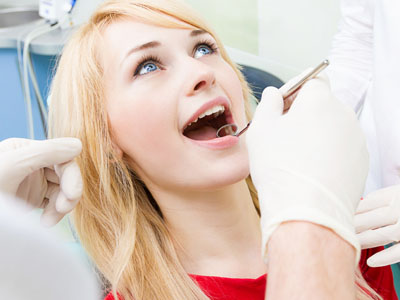
The image depicts a dental professional performing oral care on a patient, with the patient s mouth open wide and the dental professional using tools to clean or examine teeth.

How an Oral Exam Connects to Whole-Body Health

Oral health is tightly linked to overall health. During an exam we don’t just look for cavities or gum inflammation — we watch for signs that could indicate systemic conditions. Changes in the gums, persistent oral lesions, unexplained dryness, or unusual mouth sores can sometimes be early signals of broader medical issues and deserve careful attention and documentation.

Scientific research increasingly shows associations between poor oral health and systemic diseases. Chronic gum inflammation and untreated infections may contribute to or complicate conditions elsewhere in the body. That’s why oral exams often include screening questions and checks that go beyond the teeth and gums.

Common health concerns that can be related to oral conditions include:

  • Digestive disorders

  • Respiratory Problems

  • Cardiovascular Disease

  • Stroke

  • Diabetes

  • Alzheimer's Disease

The relationship goes both ways: systemic illnesses and medications can produce oral symptoms such as dry mouth, altered taste, ulcerations, and gum changes. Identifying these signs during a dental exam allows your care team to coordinate with other health providers if necessary and to recommend strategies that protect your oral and overall health.

A woman receiving a facial treatment under the supervision of a professional, with a magnifying mirror and blue gloves visible.

Why Regular Professional Cleanings Are a Key Part of Exams

Daily brushing and flossing are essential, but even the most diligent home care can miss hardened plaque (tartar) and bacteria hiding below the gum line. Professional cleanings remove these deposits and polish the teeth, reducing inflammation and lowering the risk of cavities and gum disease. Cleanings also make it easier to spot early problems during the exam.

Routine visits are an opportunity for personalized coaching. Our hygienists provide hands-on demonstrations of brushing and flossing techniques, suggest tools that suit your mouth, and recommend dietary adjustments that can reduce risk. Education is tailored — what helps one patient may not be ideal for another, so we focus on practical, achievable changes.

How often you need a cleaning depends on your individual risk factors. For many people, a twice-yearly rhythm provides the right balance of monitoring and prevention; others with a history of periodontal issues or special medical concerns may benefit from more frequent care. Your dental team will explain the reasoning and work with you to set an appropriate schedule.

Digital Imaging: Seeing What the Eye Cannot

X‑rays and other imaging tools reveal the deeper structures of the mouth — tooth roots, supporting bone, and areas between the teeth — that are invisible during a visual exam. These images help detect early decay, bone loss, impacted teeth, and other conditions that would otherwise go unnoticed until symptoms appear.

Modern digital radiography has several advantages: images are acquired quickly with minimal radiation exposure, they appear instantly on a screen for easy explanation, and they can be stored and compared over time to track changes. Because of these benefits, many clinics now favor digital sensors and software for routine diagnostic imaging.

For complex diagnostic needs and precise treatment planning, three-dimensional imaging (cone-beam computed tomography or CBCT) can provide highly detailed views of the jaws and surrounding anatomy. CBCT is especially useful for surgical planning, implant placement, and evaluating structures that cannot be fully assessed in two dimensions.

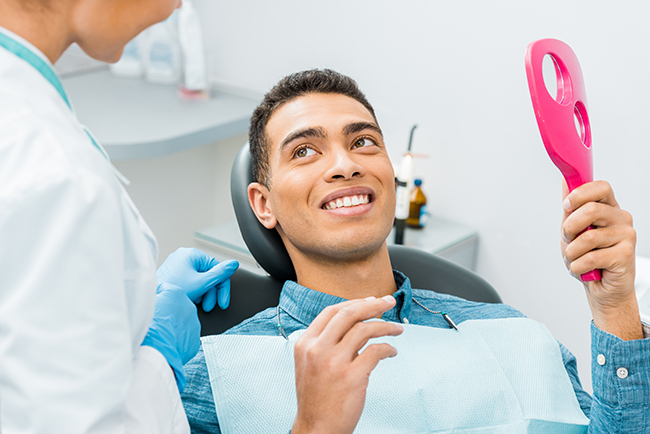
A man sitting in a dental chair with a smile on his face while holding up a pink object, possibly an oral hygiene tool, with a dental professional attending to him behind him.

Common Radiographs and When They Help

The type of image recommended depends on the clinical question. Small films can focus on a single tooth while larger images provide an overview of the entire mouth. Below are several commonly used radiographs and the kinds of information they provide to your dental team.

  • Periapical x-ray - Shows an individual tooth from crown to root and the adjacent bone, useful for diagnosing root problems and localized infections.

  • Bitewing x-ray - Captures the crowns of upper and lower teeth in one area and is particularly helpful for spotting decay between teeth.

  • Full Mouth Series - A comprehensive set of bitewing and periapical images that documents the condition of all teeth and supporting structures.

  • Panoramic Film (panorex) - A broad, two-dimensional view of the jaws and teeth that helps identify impacted teeth, large lesions, and jaw abnormalities.

  • Cephalometric Film - A side-profile image used mainly in orthodontics to assess facial growth and jaw relationships.

When advanced imaging like CBCT is appropriate, it gives clinicians three-dimensional detail that improves diagnostic accuracy and treatment outcomes, particularly for implants, surgical planning, and complex restorative work.

Regular oral exams are the foundation of long-lasting oral health. By combining a careful clinical inspection, preventive cleanings, targeted imaging, and personalized education, your dental team can identify problems early and recommend the most appropriate care. If you have questions or would like more information about what to expect during an exam, please contact us for more information.

Frequently Asked Questions

Are you accepting new patients?

+

Yes. We always welcome new patients and their families for care. Feel free to give us a call or reach out to us online to schedule a first visit or for any additional information on our office. We look forward to hearing from you!

How often do I need to get a dental checkup?

+

Routine dental checkups and professional cleanings help ensure your smile remains in tip-top condition and that any developing problems receive the prompt care they require. While it's a good idea to schedule a checkup and cleaning twice a year, longer or shorter intervals between routine visits depend on your specific needs.

What if I haven't been to the dentist in a long time?

+

We understand that life gets complicated and busy, and for various reasons, you haven't been able to get to the dentist for care. Don't worry; it's always a good time to get back in touch with the health of your smile.

At Diamond Head Dental Care, we offer skilled and compassionate care to address a wide range of dental needs. Whether you need a simple checkup and cleaning, restorations, periodontal treatment, root canal therapy, or the replacement of missing teeth to get your smile back into shape, we provide precise, gentle, stress-free treatment to give you a smile that is as beautiful as it is healthy.

Give us a call today; we're happy to address all your questions and concerns about getting your smile back in tip-top condition.

Should pregnant women get a dental checkup?

+

For pregnant women, practicing good oral care and seeing the dentist to maintain a healthy smile is considered an important component of prenatal care. Researchers have found that pregnancy not only increases the risk of oral health problems, but these problems may also lead to pregnancy complications. At the office of Diamond Head Dental Care, we provide the skilled and compassionate care required to help expectant mothers keep their teeth and gums in tip-top condition. While certain procedures are not recommended during pregnancy, we provide the necessary care and take all the necessary precautions required.

How can I improve the appearance of my smile?

+

Thanks to advances in modern dentistry, teeth that have been affected by a range of imperfections or that have sustained damage from trauma or dental decay can be restored to produce a naturally beautiful looking and functional smile.

As skilled and experienced providers of care, our office can effectively improve and enhance the appearance of teeth that are stained, discolored, misshapen, chipped, fractured, gapped, crowded, or broken down due to dental decay. At the office of Diamond Head Dental Care, we offer a comprehensive selection of the leading-edge cosmetic solutions from teeth whitening procedures, dental bonding, tooth-colored fillings, and veneers, to prosthetic solutions and dental implants to rebuild complete and beautiful smiles.

Contact our office to learn more about the many ways we can help you create the smile you've always wanted.

How should I prepare for my dental appointment?

+

If you're visiting Diamond Head Dental Care for the first time, it is helpful that you contact your former dental office and have your records sent over to us. Make note of any problems you may have so that you can discuss them with your dentist.

To provide efficient service, we ask you to please bring your insurance card, an ID, plus any referral slips or diagnostic records given to you by another office. If you are taking medications, please note or make a list of what they are as you will need to provide that information.

Does Diamond Head Dental Care treat patients of all ages?

+

Yes! We assure you that both you and your family will be in good hands at the office of Diamond Head Dental Care.

What if I'm anxious about seeing the dentist?

+

We do our best to make sure every patient who steps into our office for care is put at ease. We provide precise and gentle care and our skilled, compassionate team strives to make every visit stress-free. You can rest assured that your smile is in the best of hands and that we are doing all we can to ensure your comfort throughout every procedure. While we always take the time to explain every step in care, feel free to ask us any questions about local anesthesia and methods of dental sedation.

How much does dental treatment cost?

+

At the office of Diamond Head Dental Care, we strive to provide the highest quality of care to address all your dental needs. Once we've had the opportunity to examine your smile, we can give you a clear picture of any dental issues that are present, along with a quote for what the cost of treatment will be. The cost of care all depends upon the extent and complexity of issues affecting the health or appearance of your smile and the types of procedures that are required. Our goal is to make dental care more affordable so that you can begin treatment without any additional stress or delay.

Keep in mind that with routine dental checkups and periodic care, we can help prevent dental disease while treating emerging problems early in their onset to avoid larger issues and more expensive care down the road.

What if I have dental insurance?

+

Routine dental checkups and preventive care procedures may be covered under your dental insurance plan requiring little to no out-of-pocket expense. We invite you to check our financial information page or give us a call to find out if our office participates with your plan, and if you have any other questions about dental insurance, dental savings plans, forms of payment, or financing options. We welcome your inquiries and do our best to help you begin care without additional stress or delay.

What is the best method of replacing missing teeth?

+

If you've lost a tooth due to injury, decay, gum disease, or any other reason, we recommend dental implants to replace missing teeth. Dental implants come the closest to replicating the look, feel, and function of your natural teeth.

Is flossing as important as brushing?

+

Absolutely! Both flossing and brushing regularly are equally important to maintain your oral health. While brushing cleans the surface of your teeth, flossing cleans in between them. Flossing is important to prevent plaque buildup, which can cause gums to recede and lead to periodontal disease.

Do you still need to see a dentist if you have dentures?

+

Even if you have dentures, it is still necessary to see a dentist! Dental checkups help ensure that your dentures are comfortable, fitting properly, and that there are no other problems. Beyond assessing your dentures, our dentist will also perform a thorough examination of the jawbone, and surrounding soft tissues both inside the mouth, the face, and neck, to confirm that you remain in good oral health.

What should I do if I have a dental emergency?

+

Emergency dental care is a service we hope you'll never need- but if you do, the office of Diamond Head Dental Care is here for you!

Whether you're suffering from a chipped tooth, toothache, or any problem affecting your oral health, you can be sure to get the prompt attention and compassionate care you require at our office. Patient care and comfort are our top priorities, and we offer a comprehensive range of the most advanced services to address a broad spectrum of dental needs.

While the pain of a toothache is one of the more common reasons that patients come to our office for emergency dental care, we also promptly treat emergencies that are not necessarily painful like crowns that have been dislodged and broken dentures that leave embarrassing gaps in one's smile.

You can rest assured that your oral health is in the best of hands at our office. We'll quickly determine exactly what's wrong, explain your treatment options, and then provide the precise and gentle care you require to alleviate your discomfort and get you back on the path to oral health and wellness.

Your health and comfort are our top priorities. If your dental emergency is painful, if it affects the appearance of your smile, or if you suspect that an infection is present, our office will make every effort to see you as soon as possible for care.

Why choose the office of Diamond Head Dental Care?

+

At the office of Diamond Head Dental Care, we welcome patients of all ages for care and offer a comprehensive range of services designed to help every member of your family maintain a beautiful and healthy smile. Whether you or a loved one needs a routine checkup and cleaning, fillings, same-day crowns, a cosmetic smile makeover, the replacement of missing teeth or require the services of a skilled and compassionate emergency dentist, you can rely on our office for the highest quality care.

For more information on our office and the many services we provide, or to schedule an appointment for care, give us a call today.

What is an oral exam and why is it important?

+

An oral exam is a comprehensive dental evaluation that inspects the teeth, gums, oral tissues and related structures to detect problems early. Its purpose is to identify signs of decay, gum disease, oral lesions and functional issues before they progress. By establishing a clinical baseline, exams help clinicians monitor changes and intervene promptly when treatment is needed.

During an exam the dental team combines a health history, visual inspection and targeted diagnostics to form a complete picture of oral health. This preventive approach reduces the likelihood of advanced disease and supports overall long-term wellness. Exams also include patient education to reinforce effective home care and risk reduction strategies.

What happens during my first oral exam?

+

Your first oral exam begins with a review of your medical and dental history so the team understands medications, chronic conditions and previous dental work that could affect care. The clinician will ask about symptoms you may have noticed and document any concerns to guide the clinical evaluation. This conversation ensures findings are interpreted in the context of your overall health.

The clinical portion of the exam includes a tooth-by-tooth inspection, an evaluation of the gums and supporting bone, and an assessment of bite, jaw joint function and soft tissues. An oral cancer screening and checks for signs of bruxism or wear are also routine components. If needed, the team will recommend imaging and then explain findings and possible next steps in clear, practical terms.

How do oral exams screen for oral cancer?

+

Oral cancer screening is a standard part of routine exams and involves a careful visual inspection and palpation of the lips, tongue, floor of mouth and neck for lumps or abnormal tissue. Clinicians look for persistent sores, red or white patches, thickened areas and any unexplained changes in the soft tissues. Early detection is critical, so suspicious findings are documented and monitored closely.

If the exam identifies a concern the dental team may recommend additional evaluation, such as a biopsy or referral to a specialist for diagnosis. Adjunctive screening tools are available in some settings, but clinical judgment guides when to use them. The practice communicates findings and follow-up recommendations clearly so patients understand the rationale for any next steps.

How often should I schedule an oral exam?

+

The appropriate exam interval depends on individual risk factors, oral health status and medical history rather than a one-size-fits-all timetable. Many patients benefit from exams and professional cleanings every six months, which provides regular monitoring and prevention for common problems. Patients with a history of periodontal disease, active decay or complex medical conditions may need more frequent visits for closer management.

Your dental team will review your specific risk profile and recommend a recall schedule that balances monitoring with prevention. Recall intervals can be adjusted over time as your oral health improves or if new concerns arise. Regular exams create the data clinicians need to personalize preventive care and maintain stability long term.

What diagnostic imaging might be used during an oral exam?

+

Diagnostic imaging supplements the visual exam by revealing structures that cannot be seen with the naked eye, such as tooth roots, supporting bone and areas between teeth. Common two-dimensional images include periapical and bitewing films for tooth-level detail and panoramic images for a broad overview of the jaws. Digital radiography provides quick results with reduced radiation exposure and allows images to be stored and compared over time.

For complex diagnostic needs, three-dimensional cone-beam computed tomography (CBCT) can offer highly detailed views useful for implant planning, surgical assessment and evaluation of anatomical relationships. The type of image recommended is determined by the clinical question and the potential benefit to diagnosis and treatment planning. Your clinician will explain why an image is suggested and how it supports safe, effective care.

How do oral exams relate to overall health?

+

Oral health and systemic health are closely connected, and findings in the mouth can sometimes reflect or influence conditions elsewhere in the body. Chronic gum inflammation and untreated oral infections have been associated with increased risk factors for systemic conditions such as diabetes and cardiovascular disease, so identifying and managing oral disease contributes to broader health goals. Likewise, systemic illnesses and medications can produce oral symptoms like dry mouth, ulcers or gum changes that are important to document.

When exam findings suggest a possible link to a medical condition, the dental team may coordinate with your primary care provider or a specialist to ensure care is aligned. Thorough documentation and communication help ensure that oral health considerations are integrated into overall treatment plans. Regular exams provide an opportunity to screen for signs that warrant further medical evaluation and to recommend strategies that protect both oral and general health.

Will I receive a professional cleaning during my oral exam?

+

A professional cleaning is often provided the same day as an oral exam, although scheduling can vary depending on the clinic and individual needs. Hygienists remove hardened plaque (tartar) and bacteria from above and below the gum line, polish tooth surfaces and check for areas that need attention. This removal of deposits reduces inflammation, lowers the risk of cavities and helps the clinician detect early problems more reliably during the exam.

Cleanings also include personalized coaching on brushing, flossing and other home-care strategies tailored to your mouth. The hygienist may demonstrate techniques, suggest tools and explain how dietary habits affect oral health. Based on the exam and cleaning results, the team will recommend an appropriate recall interval and any additional therapy that may be needed.

How should I prepare for an oral exam?

+

If you are a new patient at Diamond Head Dental Care in Pearl City, plan to arrive a few minutes early to complete intake forms and bring a list of current medications and any recent dental records that may be helpful. Preparing a brief summary of symptoms or questions you want to address helps ensure the clinical team understands your priorities. Good oral hygiene before the visit makes the exam and any cleaning more effective and helps the clinician see areas of concern clearly.

Wear comfortable clothing and be ready to discuss your general health, recent surgeries or changes in medication, since these details can influence dental care. If you have imaging from a recent dental provider, bringing digital files or printed radiographs can reduce duplication. Clear communication and preparation help the visit run smoothly and allow the team to focus on assessment and education.

What signs or symptoms should prompt an earlier oral exam?

+

You should seek an appointment sooner than your regular recall if you experience new or worsening symptoms such as persistent toothache, swelling, unexplained bleeding, loose teeth or a sore that will not heal. Sudden changes in bite, difficulty opening the jaw or unexplained numbness in the mouth or face also warrant prompt evaluation. Early assessment helps prevent minor issues from becoming more serious and can identify conditions that need immediate attention.

If you notice suspicious white or red patches, new lumps, persistent dry mouth or any sudden changes in taste or swallowing, contact your dental team for guidance. The office can advise whether you need an urgent visit or can be triaged for the next available appointment. Timely evaluation improves the chances of successful, less invasive treatment when problems are caught early.

How does the dental team use exam findings to plan care?

+

Exam findings are used to prioritize concerns, create a treatment sequence and set measurable goals for oral health maintenance. The team documents clinical observations, diagnostic images and periodontal measurements to form a clear picture of current needs and risks. Together with the patient, clinicians discuss recommended therapies, explain benefits and risks, and outline realistic steps to achieve and maintain oral health.

Care planning often includes preventive strategies, restorative treatment when necessary and referrals to specialists for complex needs. The dental team coordinates with other healthcare providers when systemic health issues are relevant to dental care. Follow-up intervals and monitoring plans are tailored so patients receive the right level of care at the right time.

We Insurance! All PPO Dental Insurance Plans ACCEPTED!